For this residential project in Nonthaburi, Thailand, the homeowner wanted more than daytime solar savings.
The family had an electricity bill of approximately THB 7,000–8,000 per month, significant afternoon and evening air-conditioning use, and wanted backup power available during occasional grid outages.
After reviewing how the household actually used electricity, Thai Solar Power designed a 12.6 kWp hybrid solar system with 13 kWh of LiFePO₄ battery storage.
What the Homeowner Wanted
The family's electricity usage changed considerably throughout the day.
While the children were at school, daytime loads still included laundry, appliances and normal household consumption. Around 3 PM, the children returned home and air-conditioning use increased through the afternoon and evening.
The customer wanted the solar system to achieve several things:
- Reduce electricity purchased from the grid
- Use solar directly during daylight hours
- Charge the batteries with available daytime solar
- Use stored energy later in the afternoon and evening
- Provide backup for important loads during a grid outage
Because the customer wanted both energy savings and backup capability, a hybrid solar system was a better fit than a simple on-grid system.
The 12.6 kWp Hybrid Solar Solution
The final installation included:
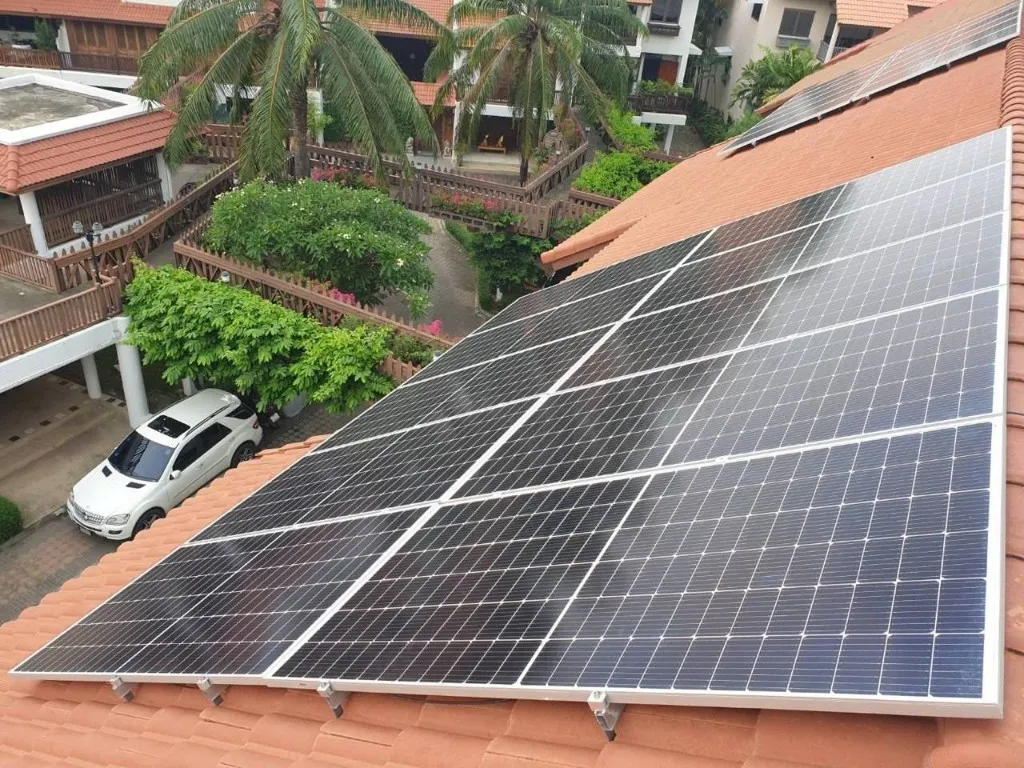
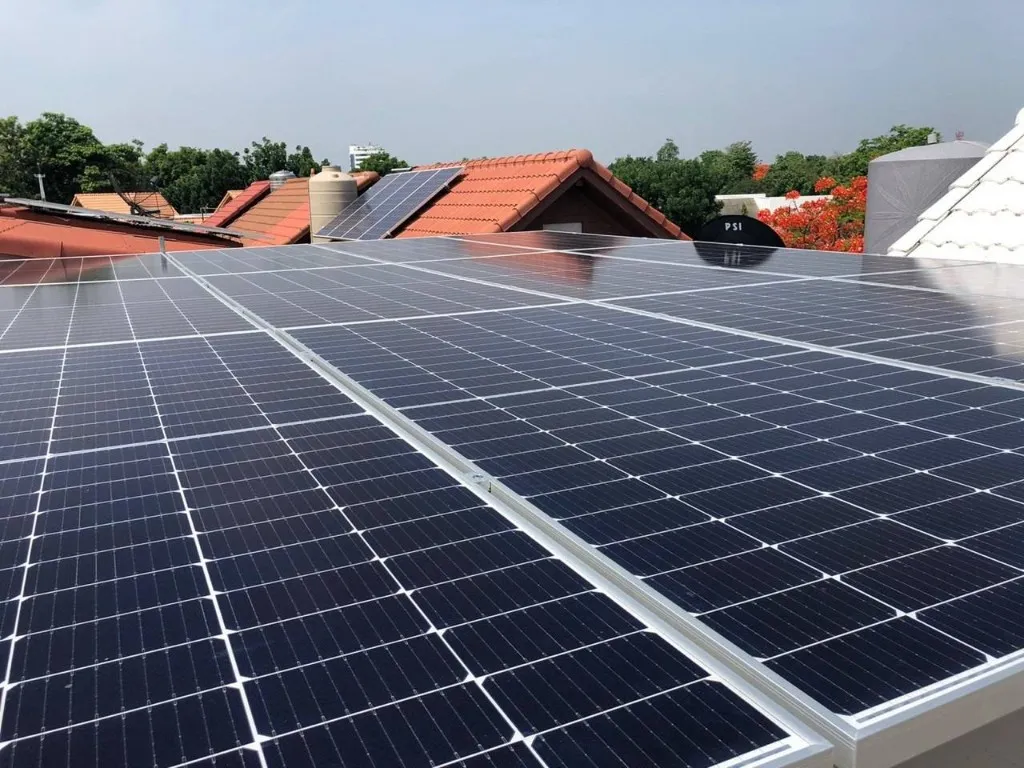
- 28 × LONGi 450 W monocrystalline solar panels
- 12.6 kWp total installed solar capacity
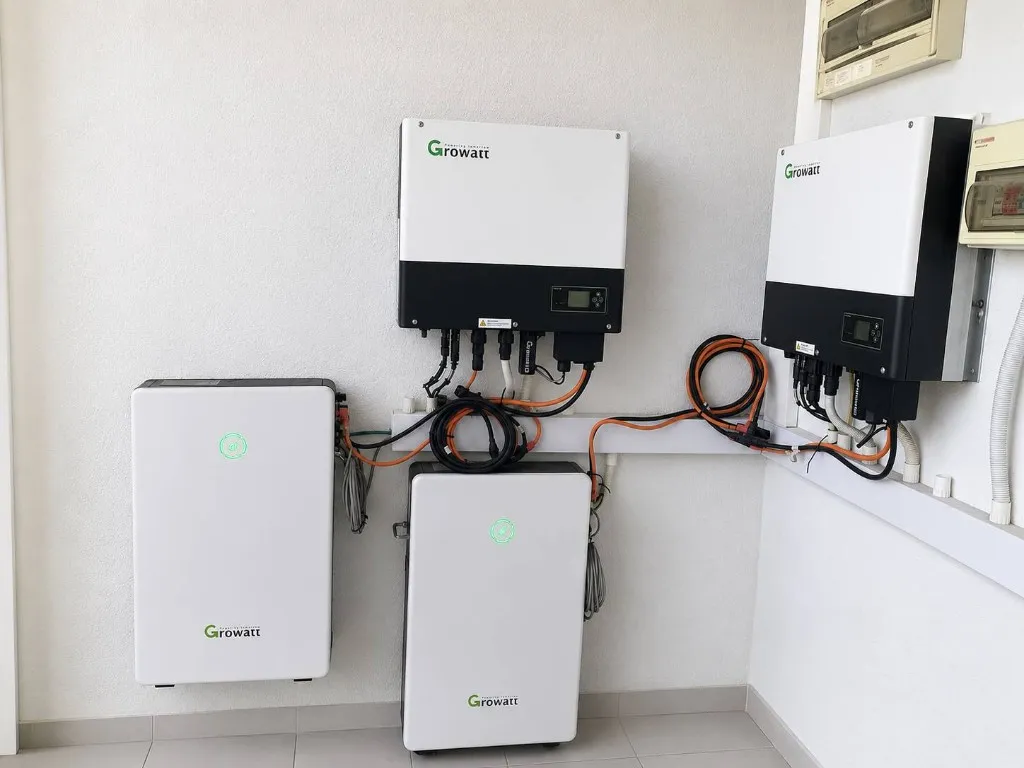
- 2 × Growatt 6 kW single-phase inverters
- 12 kW combined inverter capacity
- 2 × Growatt 6.5 kWh LiFePO₄ batteries
- 13 kWh total battery storage
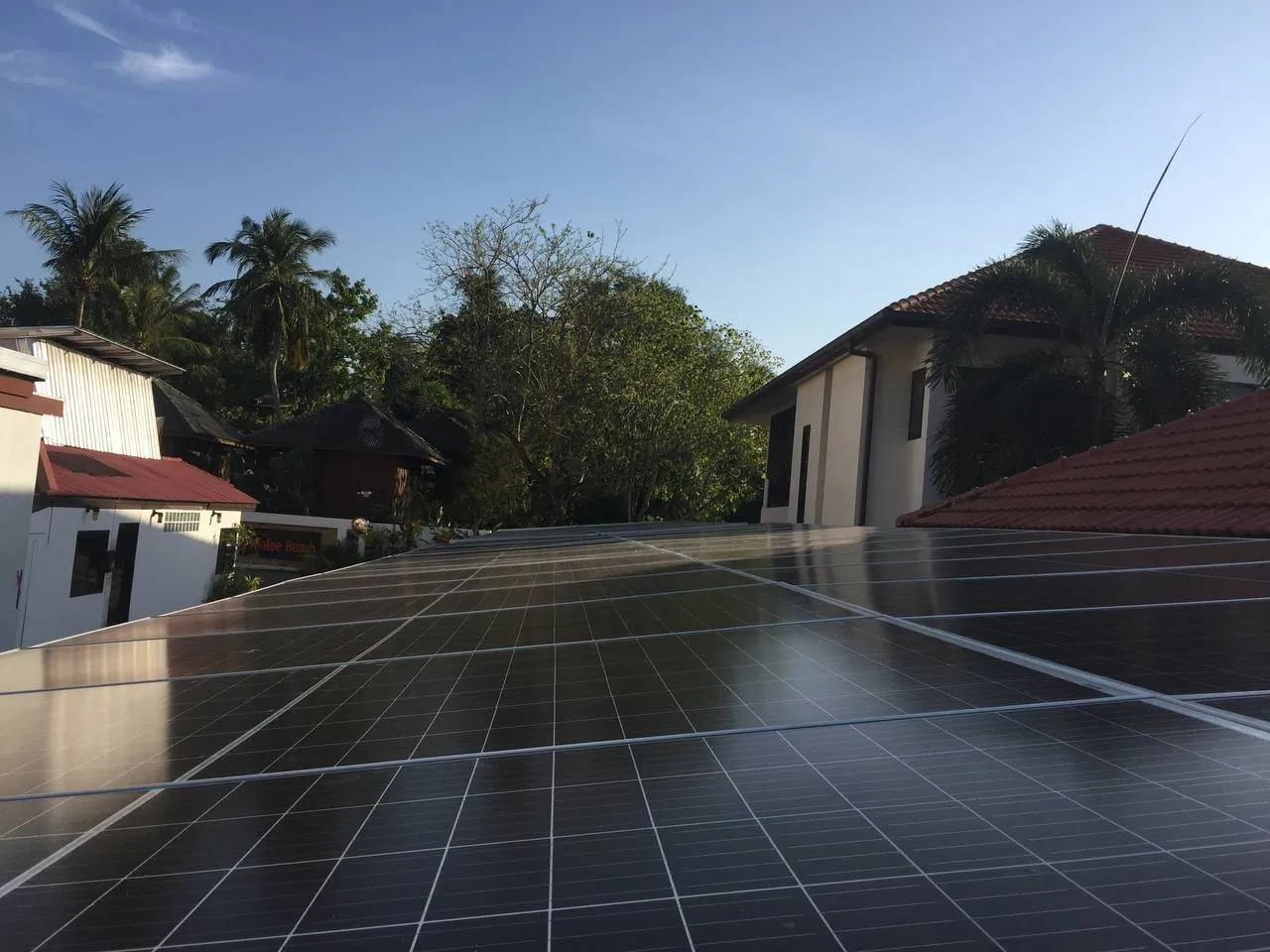
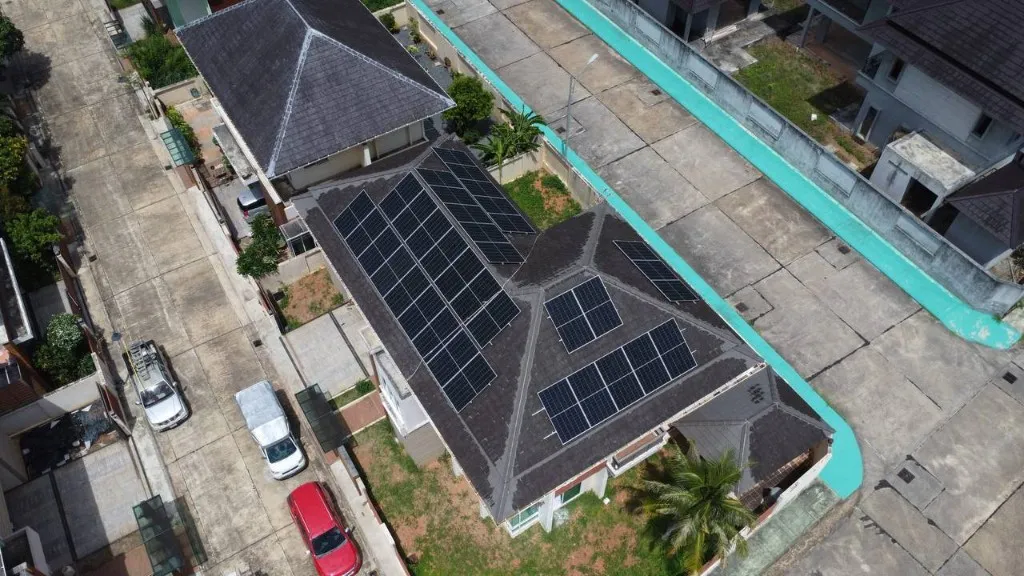
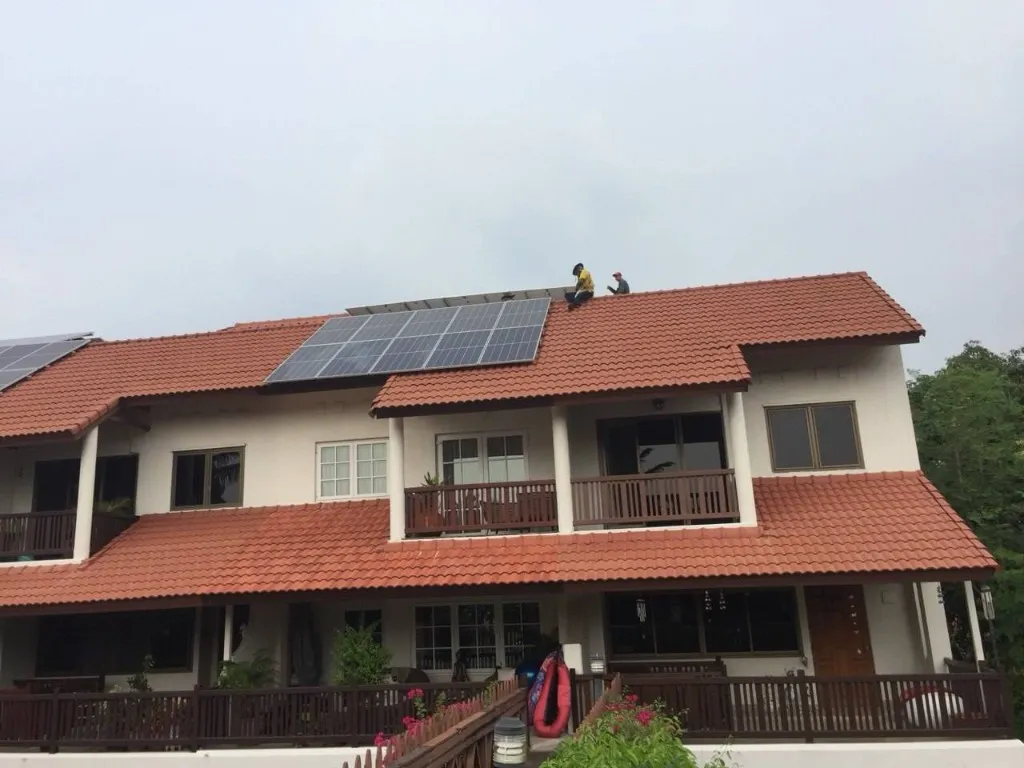
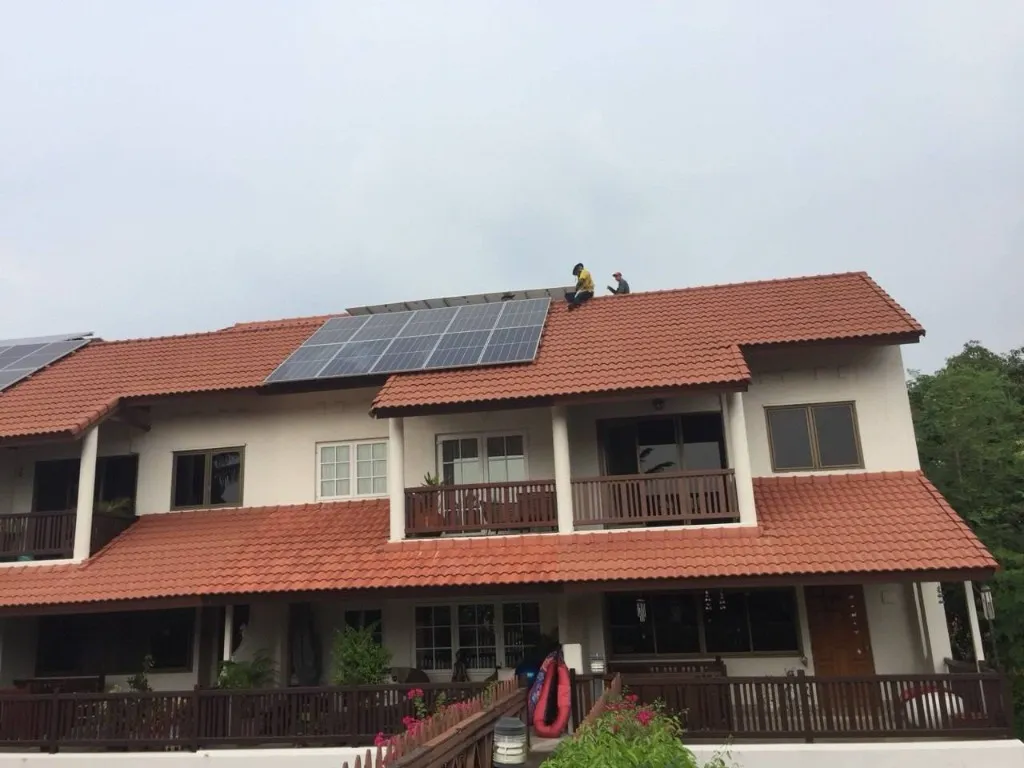
The solar panels were installed across two available roof areas.
Part of the array was mounted on a raised structure over a flat concrete roof/terrace, while the remaining panels were installed on a sloped tiled roof. This allowed us to make practical use of the available roof space.
The batteries were installed on a covered terrace, protected from direct sunlight and unnecessary weather exposure.
How Solar and Battery Fit the Family's Daily Routine
The system was designed around the household's real energy pattern.
During the day, solar generation first supports the home's active electrical loads.
When solar production is available beyond the immediate household demand, energy can also be used to charge the batteries.
As the family returns home in the afternoon and air-conditioning demand increases, stored battery energy can support part of the evening consumption.
Based on the installed 12.6 kWp PV capacity, the system was designed to generate around 40+ kWh on good solar days, depending on weather, season, shading, roof conditions and module temperature.
This figure is a design expectation rather than a guaranteed daily output.
For homeowners trying to decide whether storage is necessary, see our Insight Do You Really Need a Solar Battery in Thailand?
Backup Designed Around What Actually Matters
The customer did not need every appliance in the house to operate during an outage.
Instead, backup was designed around the loads that mattered most:
- One air conditioner
- Wi-Fi / internet
- CCTV
- Refrigerator
- Electric parking/gate door
The expected peak backup demand was approximately 5 kW.
Grid outages in this area were not frequent and were generally relatively short, typically around or below two hours. The system therefore focused on practical backup requirements rather than unnecessarily increasing the battery size to support the entire house.
This is an important part of hybrid system design. Backup capacity should match what the homeowner genuinely needs during an outage.
Installation, MEA Approval and Monitoring
The installation was completed in approximately three days.
As part of the full EPC scope, Thai Solar Power also handled the MEA permission and connection process.
The Growatt inverters were equipped with Wi-Fi monitoring, allowing the homeowner to use the mobile monitoring platform to check:
- Solar production
- Battery status
- System status
- Energy flow
Since commissioning, no major technical system issues were reported. The only occasional support request involved Wi-Fi connectivity with the monitoring system.
Why Correct Hybrid Sizing Matters
A hybrid solar system should not be designed simply by adding the largest possible solar array or battery.
For this Nonthaburi home, the system design considered the customer's electricity bill, daytime and evening consumption, backup requirements, expected outage duration, available roof areas and electrical system.
The battery had clear purposes: evening energy support and backup power.
That is how Thai Solar Power approaches residential solar EPC projects. If on-grid solar is enough for the customer's objective, we can recommend on-grid. When battery storage has a genuine purpose, a hybrid system may be the better choice.
For a simple comparison, see On-Grid vs Hybrid Solar in Thailand: Which Is Right for Your Home? You can also read Why We Prefer LFP Batteries for Home Solar in Thailand for more about the battery technology used in modern residential systems.
Planning Solar and Battery Storage?
Planning solar and battery storage for your home in Thailand? Send Thai Solar Power your electricity bill, location and energy requirements through our Get a Quote form. We can review your consumption, backup needs and daily usage before recommending the right system.