If your main goal is reducing your electricity bill and your home uses plenty of electricity during the daytime, an on-grid solar system may be enough.
If you also want backup power during outages or want to store solar energy for use later in the evening, a hybrid solar system may be more suitable.
The important point is simple: you do not automatically need a battery just because you install solar.
| Feature | On-Grid | Hybrid |
|---|---|---|
| Reduce grid electricity use | Yes | Yes |
| Battery capability | No | Yes |
| Backup during grid outage | Normally no | Yes, when correctly designed |
| Best suited for | Daytime savings | Savings + evening use + backup |
When Does On-Grid Solar Make Sense?
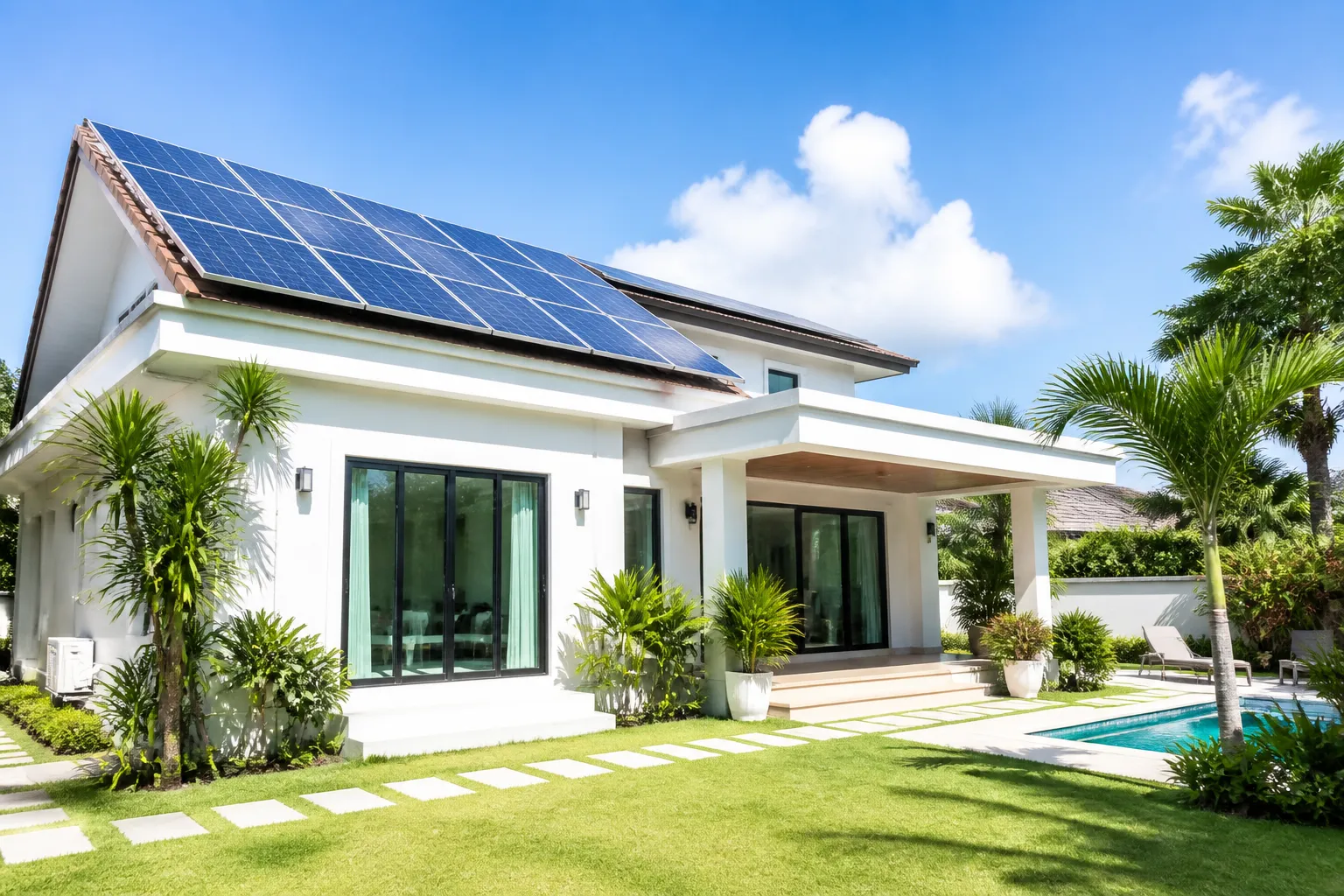
For many homes in Thailand, on-grid solar is a practical choice when reducing the electricity bill is the main objective.
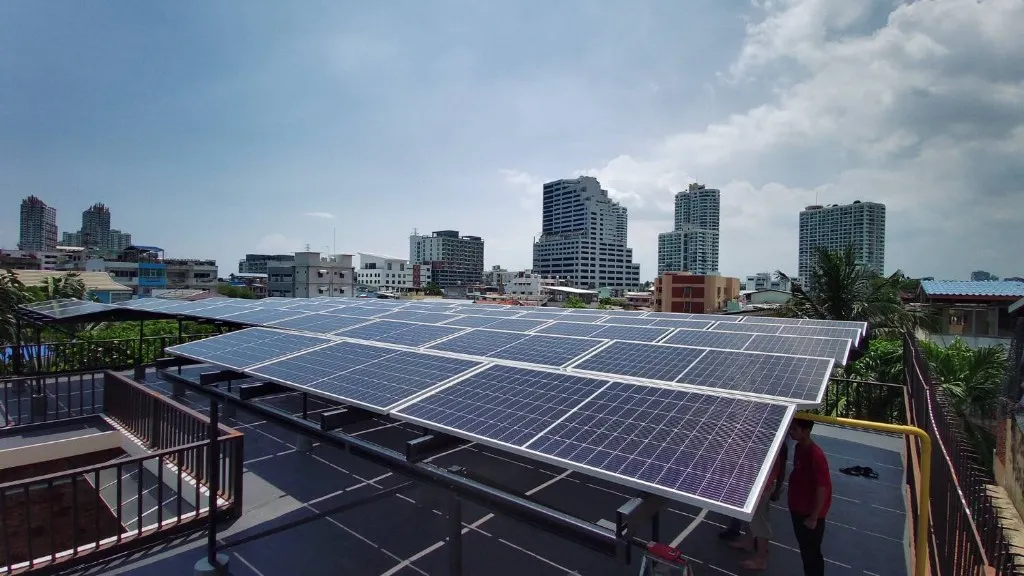
It works particularly well when the property already uses significant electricity during the daytime. Typical loads can include air conditioning, swimming-pool pumps, appliances, home-office equipment and EV charging.
Imagine a home in Bangkok where several air conditioners and a pool pump run during the day. The grid supply is reliable and the homeowner is mainly interested in reducing electricity purchased from the utility.
In this situation, an on-grid system may be completely sufficient.
There is one important limitation: a standard on-grid inverter normally shuts down when the utility grid fails. So if backup power is important, the system needs to be designed differently.
When Does Hybrid Solar Make More Sense?
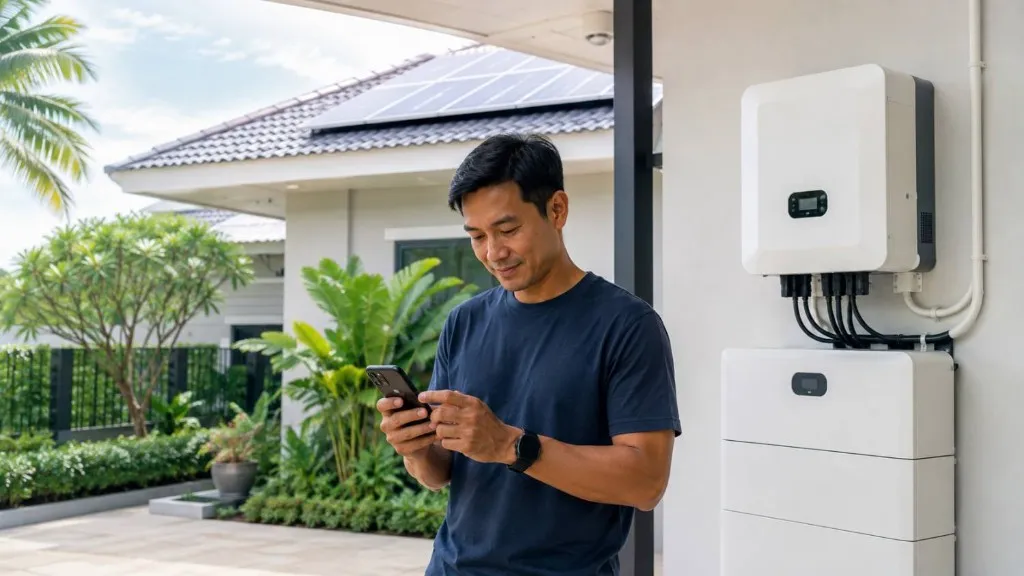
A hybrid solar system adds the ability to work with battery storage and backup circuits.
Hybrid may be more suitable when:
- You want backup during power outages
- Your electricity use remains high in the evening or at night
- You want to store some daytime solar energy for later use
- Grid reliability is a concern at your property
Battery size should be based on the loads you actually want to support and how long you need backup.
A bigger battery does not automatically mean a better system.
Some modern hybrid inverter models can also support limited PV-only backup operation without a battery, depending on the exact inverter, wiring, configuration and available solar power. However, this is model-specific and is not the same as proper battery backup. Without stored energy, cloud cover, changing solar production or sunset can quickly reduce the available backup power.
We will cover this subject separately in another Insight article.
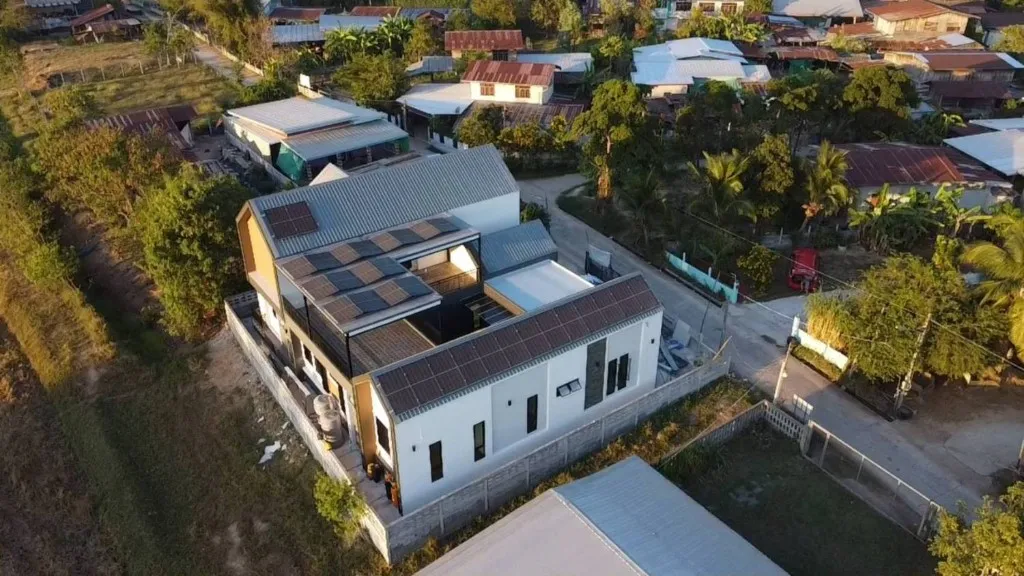
A Real Example: Hybrid Solar for a New Home in Nakhon Ratchasima
A Thai Solar Power project in Nakhon Ratchasima is a good example of why the customer’s requirements should determine whether on-grid or hybrid is the better choice.
The customer was building a new house and initially considered an on-grid solar system.
However, he already knew that the area experienced grid outages and wanted the new property to have backup capability.
After discussing those requirements, the recommended solution changed from on-grid to hybrid solar with battery storage.
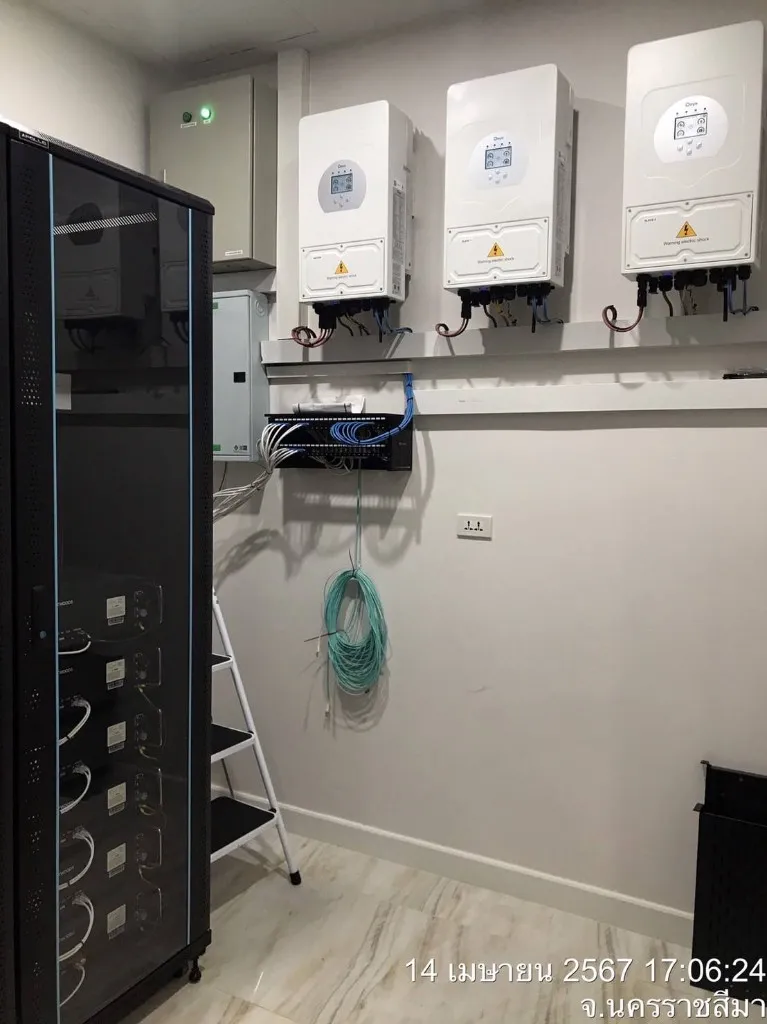
The system included:
- 31 × LONGi 480 W solar panels
- 14.88 kWp installed PV capacity
- 3 × Deye 5 kW single-phase hybrid inverters
- 15 kW total inverter capacity
- 6 × 5.12 kWh battery modules
- 30.72 kWh total installed battery capacity
The important lesson is not simply the equipment size.
The customer’s need for backup changed what the correct solar solution looked like.
A future Nakhon Ratchasima hybrid solar Solution case study will explain this project in more detail.
On-Grid or Hybrid? Make the Decision Quickly
Choose On-Grid Solar If…
- Your main priority is reducing your electricity bill
- You use significant electricity during daylight hours
- Your grid electricity is reliable
- Backup power is not important
Consider Hybrid Solar If…
- You want power available during grid outages
- Your evening or nighttime consumption is significant
- You want to store daytime solar energy for later
- Your local grid is unreliable or outages are a concern
A Bangkok property with heavy daytime air-conditioning and reliable grid supply may have very different requirements from a villa or newly built home in an area where rainy-season or local outages are more common.
Why Thai Solar Power Does Not Automatically Recommend Batteries
Thai Solar Power is a full-service solar EPC contractor, not an equipment retailer.
Our approach is to understand the customer’s electricity usage and requirements before deciding on the system.
If on-grid solar can achieve the customer’s goal, we can recommend on-grid.
If backup power, evening consumption or grid reliability creates a genuine need for battery storage, then hybrid may be the more appropriate solution.
The final recommendation should consider the electricity bill, daytime and nighttime consumption, backup requirements, expected outages, meter type, property location, roof conditions and existing electrical system.
For more information about storage, see Do You Really Need a Solar Battery in Thailand? and Why We Prefer LFP Batteries for Home Solar in Thailand.
Not sure whether on-grid or hybrid solar is right for your home? Send Thai Solar Power your electricity bill, location and energy requirements through our Get a Quote form. We can review your consumption and recommend a system based on your actual needs.