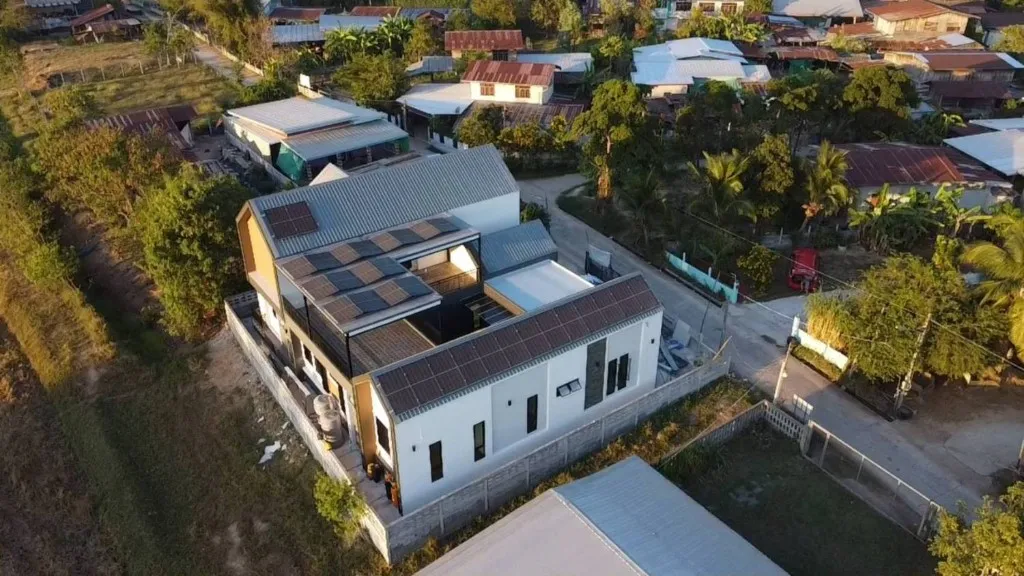
This Bangkok project was not a typical home solar installation. Thai Solar Power designed a 33.2 kWp solar system with 50 kWh of battery storage and 30 kW of off-grid inverter capacity to serve both a private house and a separate office, each with very different electricity-use patterns. The system was originally completed in 2020 and later upgraded in 2024.
The customer's combined electricity cost before solar was approximately THB 18,000 per month. But reducing the bill was only one part of the project. The system also needed to manage large daytime office loads, evening household consumption, battery charging, automatic grid fallback, and a custom rooftop solar canopy.
A Large Off-Grid System for Both a House and Office
The property included a private house and an office with separate electricity meters.
The office had five rooms and one hall, with older air-conditioning units creating a significant daytime load. The house had a broader residential load profile including air-conditioning, water heating, pool equipment, kitchen appliances, washing machines and normal household consumption.
The key engineering challenge was that these loads did not peak at the same time.
During office hours, the office air conditioners represented a major part of the consumption, while the house was normally below its maximum load. After approximately 4 PM, the office closed and its energy demand dropped significantly, while household electricity use became more important.
This difference in timing became central to the design.
Why Load Measurement Came Before System Sizing
For a project like this, simply looking at the THB 18,000 electricity bill would not have been enough.
Thai Solar Power measured the actual loads and studied when electricity was being consumed across both parts of the property.
This is known as load diversity. A property may contain many appliances with a high theoretical combined demand, but that does not mean every appliance reaches maximum power at the same time.
Understanding this allowed the system to be designed around realistic operating conditions rather than unnecessarily sizing equipment for an unlikely theoretical maximum.
Thai Solar Power also included approximately 20% engineering margin in both the PV capacity and battery storage for this project. The additional margin helped account for changing loads, weather conditions and expected battery degradation over time.
This 20% margin was specific to this project and should not be considered a universal sizing rule for every off-grid solar system.
33.2 kWp Solar + 50 kWh Battery + 30 kW Off-Grid Inverters
The original system included:
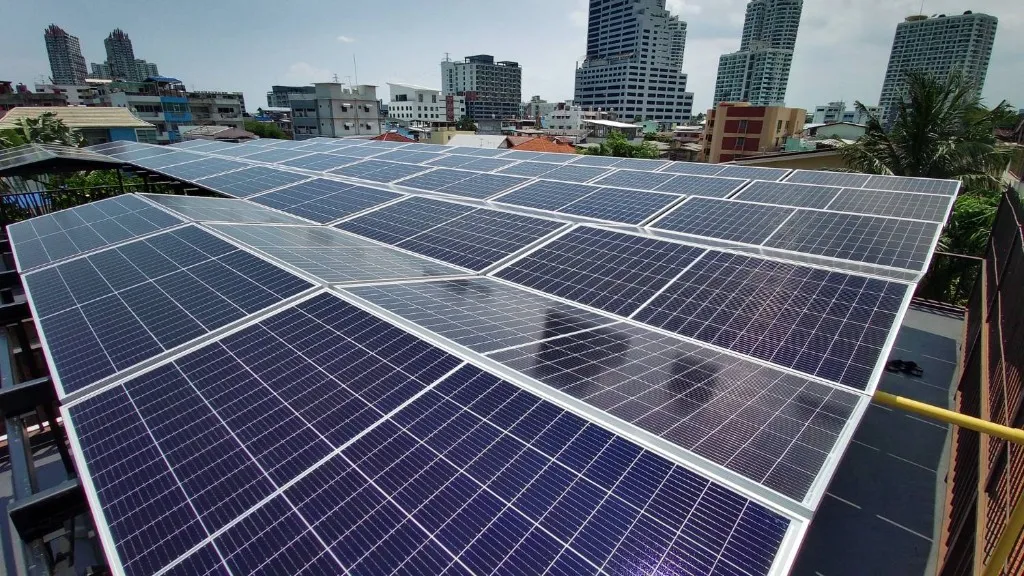
- 83 × DAH Solar monocrystalline panels, approximately 400 W each
- 33.2 kWp total PV capacity
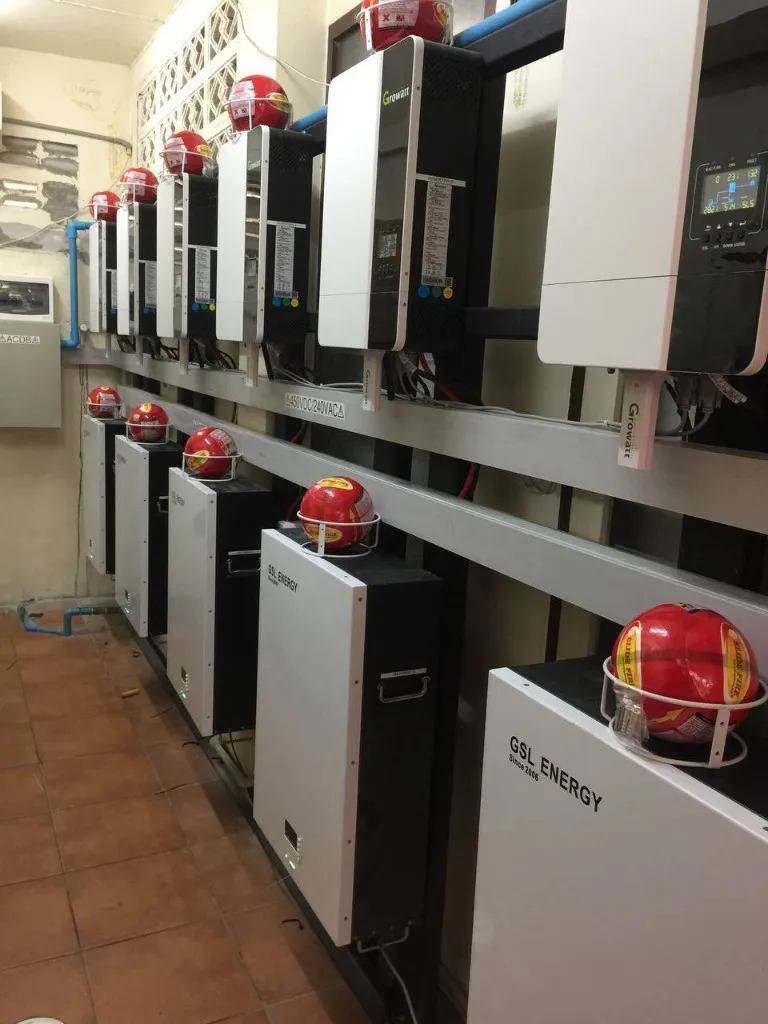
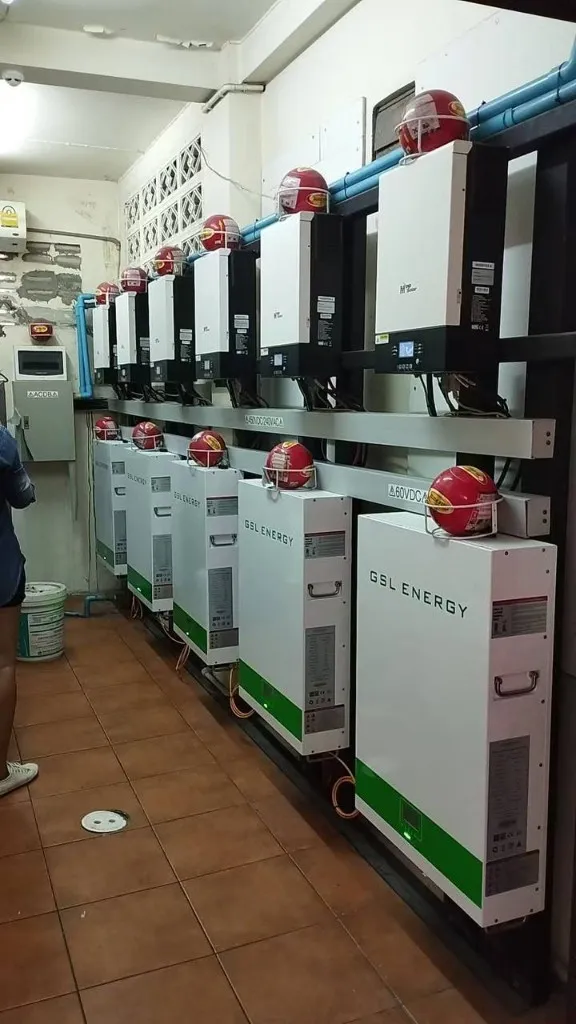
- 6 × Growatt 5 kW off-grid inverters
- 30 kW total inverter capacity
- Approximately 50 kWh of GSL LiFePO₄ battery storage
On good solar days, the battery bank was often fully charged by around noon. The system generally operated at approximately one battery cycle per day, although actual operation naturally varied with weather and consumption.
Grid electricity was therefore used mainly as a fallback rather than the property's primary energy source.
In particularly poor solar conditions, such as prolonged rainy weather, the system could automatically use the grid when solar generation and remaining battery capacity were not sufficient.
Two ATS Systems and Intelligent Energy Management
One of the most important engineering features was the use of two independent Automatic Transfer Switches, or ATS units.
One ATS served the house and the second served the office.
The house ATS was designed for the whole house, rather than only a small group of backup circuits.
When available solar and battery energy were insufficient, the ATS could automatically transfer the relevant part of the property to grid power without requiring the customer to manually operate switches.
The office also had its own operating strategy.
Because the office normally closed at around 4 PM, there was little reason to continue reserving battery energy for office loads after working hours. Once office demand dropped, stored energy could be used more effectively for the house during the afternoon and evening.
This control logic is a good example of why large off-grid projects require more than selecting equipment from a catalogue. The system needs to understand how the property actually operates.
Thai Solar Power also replaced the property's old main distribution board (MDB) so the electrical infrastructure could properly integrate the house, office, six inverters, battery storage, ATS controls and grid fallback.
Engineering a Rooftop Solar Canopy Without Losing the Roof
The PV array itself required another level of engineering.
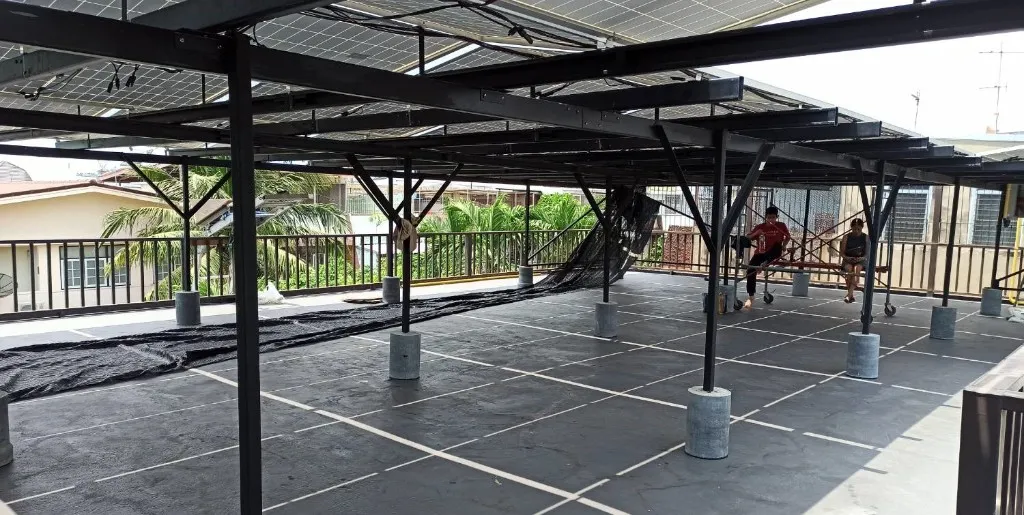
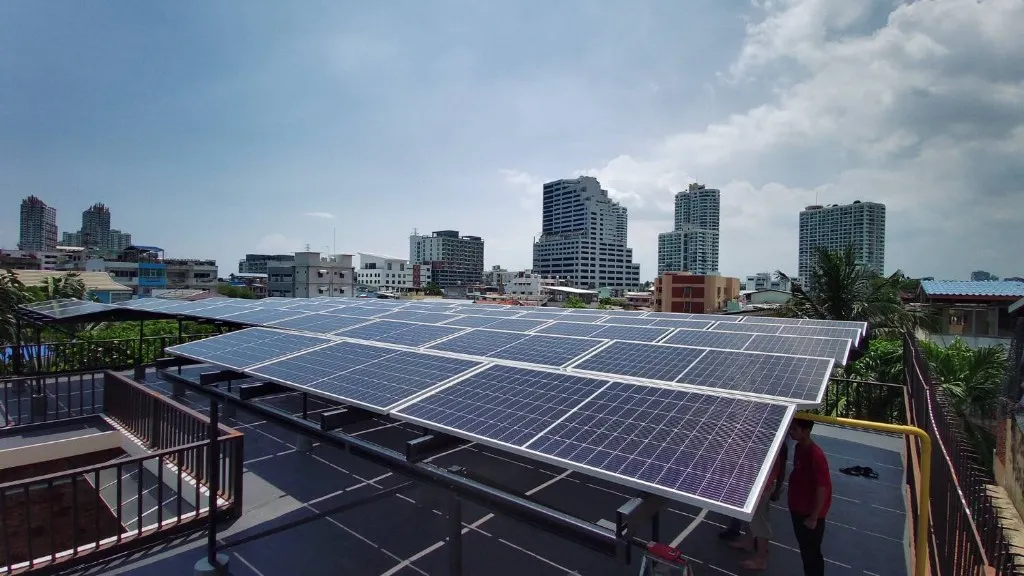
Instead of simply installing modules directly onto the existing roof, Thai Solar Power developed an approximately 2.5-metre-high rooftop solar canopy.
This allowed the same roof area to serve several purposes.
The solar panels generated electricity while also reducing direct sunlight hitting the rooftop below. At the same time, the raised structure preserved useful space underneath.
The customer continued using the rooftop in the evenings for family time, dining and gardening.
The canopy was not designed as a waterproof roof, so some rainwater could still pass between the panels. Its purpose was solar generation, shading and preservation of usable rooftop space.
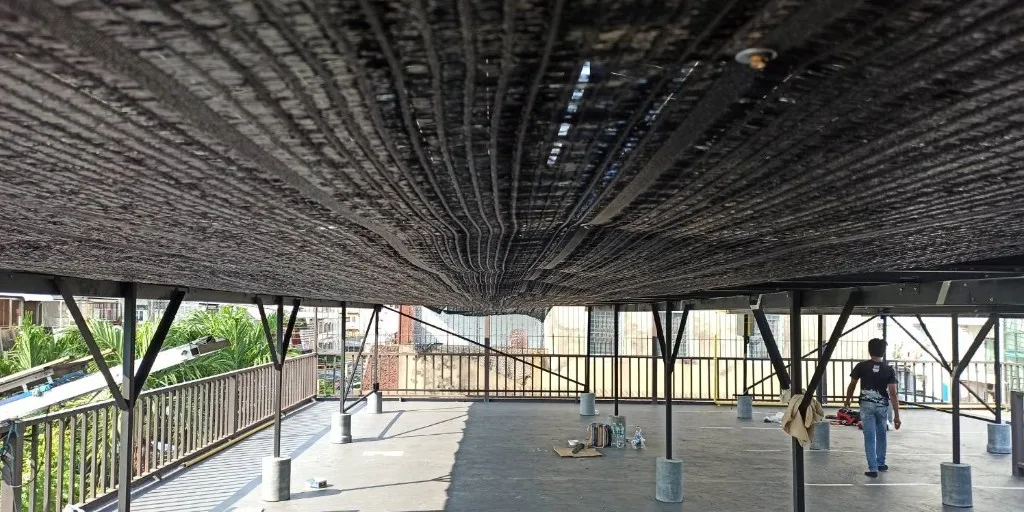
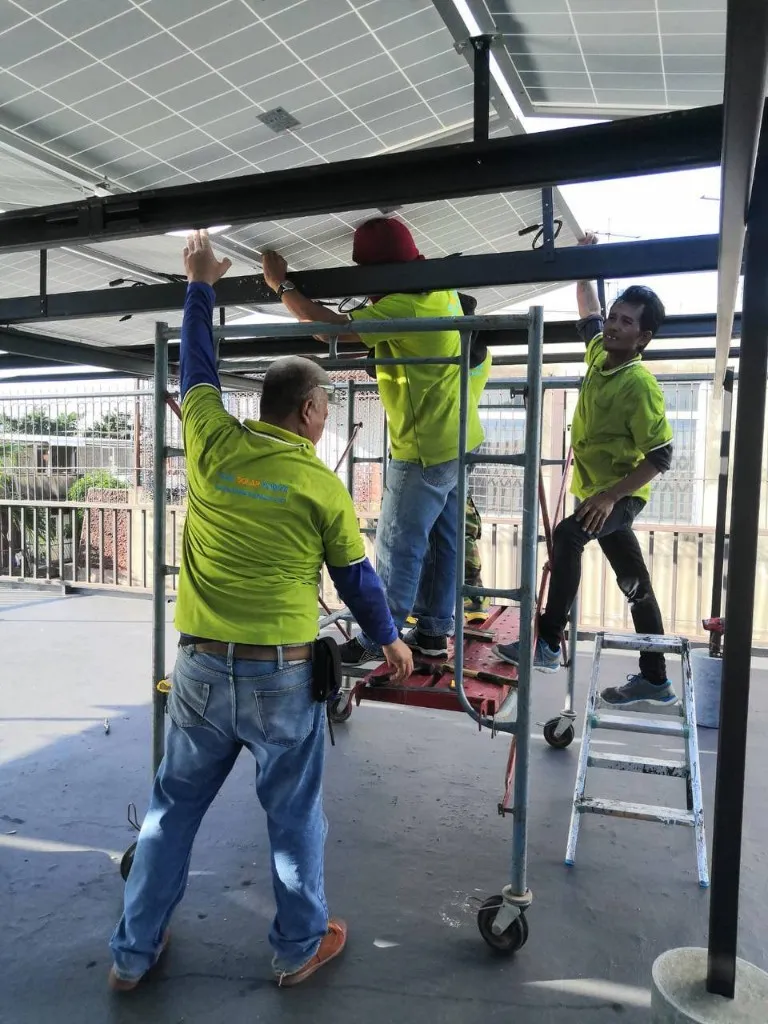
Before construction, Thai Solar Power coordinated with a third-party registered structural engineer. Formal structural calculations and drawings considered the existing roof, supporting structure weight, PV module weight, wind loading and structural stability.
The structure has remained in service since 2020 with no reported structural problems.
The full original project took approximately 35 days, mainly because of structural engineering, fabrication and preparation of the rooftop canopy. Electrical installation and wiring took roughly 17 days to three weeks.
Around 80% Lower Grid Electricity Costs in This Project
Before the installation, the customer's combined electricity cost was approximately THB 18,000 per month.
After the system was operating, the customer generally reported electricity bills of:
- Below THB 3,000/month during stronger solar periods
- Around THB 4,000/month during the rainy season
That represents roughly a 78–83% reduction in grid electricity cost for this particular property, depending on season and usage.
These results should not be treated as a guaranteed saving for another customer. Solar performance and bill reduction depend heavily on electricity consumption, system size, weather, operating hours and how effectively solar energy is used.
Four Years Later: Inverter and Battery Upgrade
Thai Solar Power remained involved with the project after the original installation.
By 2024, the customer found the cooling-fan noise from the original Growatt off-grid inverters increasingly disruptive, and there were also nuisance alarms.
Rather than rebuilding the entire solar installation, Thai Solar Power retained the original 83 DAH Solar panels and rooftop structure and upgraded the parts that needed improvement.
The inverter system was replaced with:
- 6 × MPP Solar 5 kW off-grid inverters — 30 kW total
The battery bank was also replaced with newer:
- 5 × GSL 10 kWh LiFePO₄ home batteries — 50 kWh total
After the upgrade, the customer experienced smoother operation, no more annoying inverter fan noise and fewer nuisance alarms.
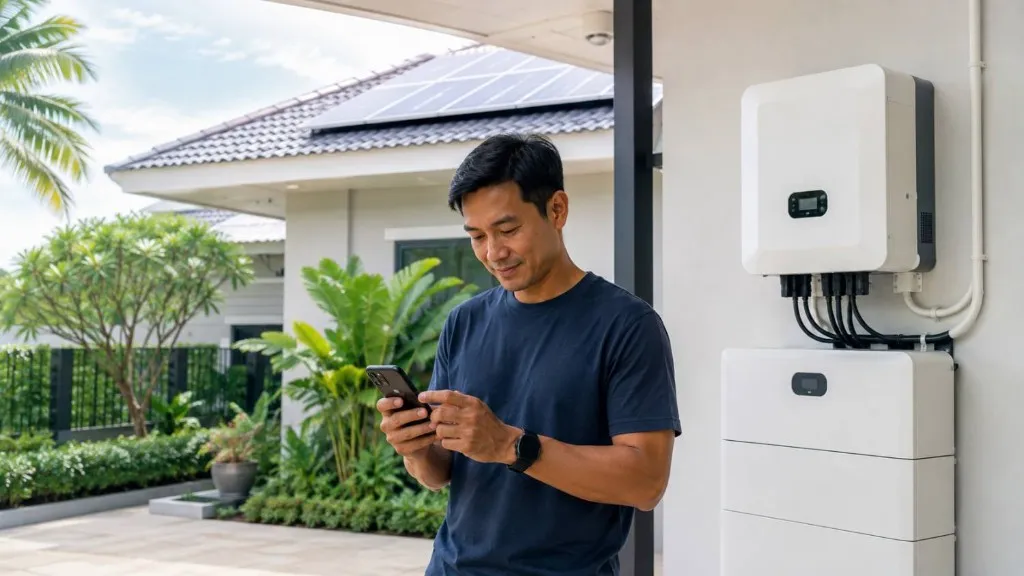
The MPP Solar monitoring platform also allowed the customer to check PV production, battery state of charge, property load, grid input and inverter status remotely.
Why Long-Term EPC and Warranty Responsibility Matters
This project also demonstrates why after-sales support matters on a large battery system.
The original GSL batteries later developed problems, and GSL accepted the warranty claim and replaced the battery equipment with newer models. Growatt also accepted the relevant warranty claim and provided a full refund.
Equipment problems can happen even with established brands. What matters is whether the installer remains involved when support is needed.
Thai Solar Power continued working with the customer years after commissioning, coordinated the warranty process, upgraded the inverter and battery systems, and kept the original PV array and structural investment in service.
For a complex off-grid solar system in Thailand, the equipment is only part of the project. Successful operation depends on load analysis, battery sizing, electrical infrastructure, ATS control, structural engineering and long-term technical support.
For related reading, see Do You Really Need a Solar Battery in Thailand?, On-Grid vs Hybrid Solar in Thailand, and Why We Prefer LFP Batteries for Home Solar in Thailand.
Planning a Large Off-Grid or Battery-Backed System?
Planning a large off-grid or battery-backed solar system in Thailand? Send Thai Solar Power your electricity bills, property details and expected loads through our Get a Quote form. For complex systems, we review when and how electricity is used before recommending the PV, battery, inverter and backup configuration.