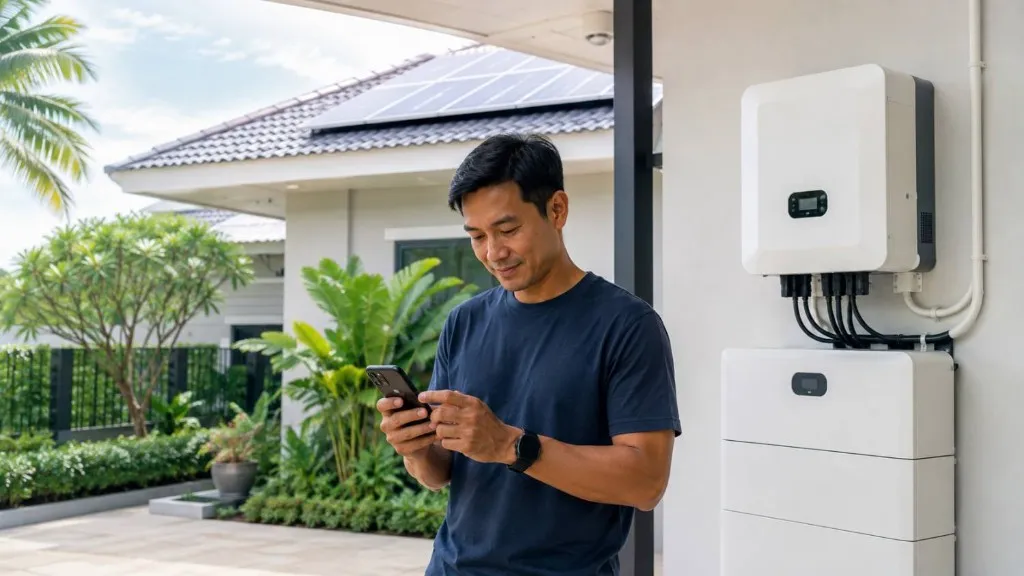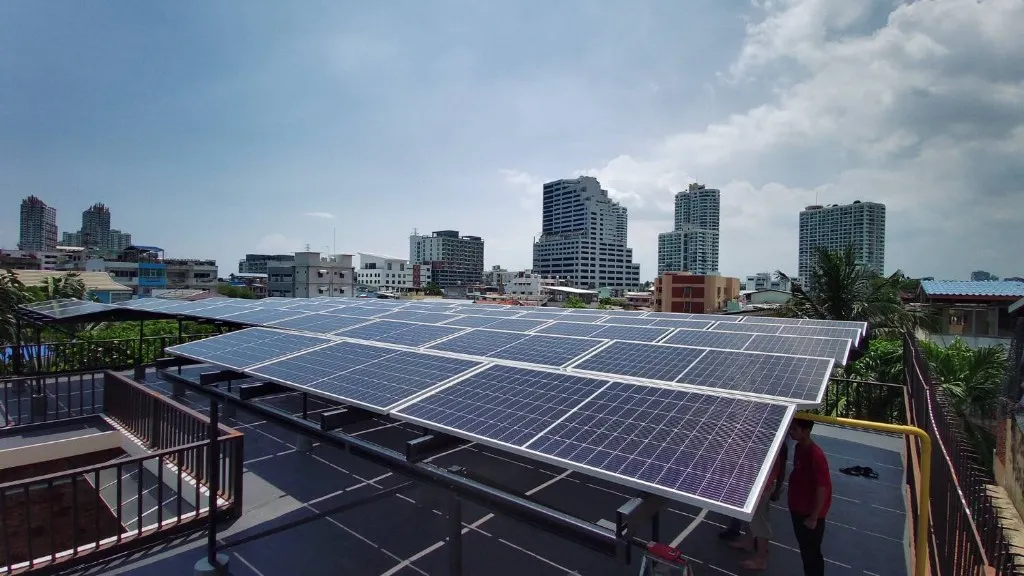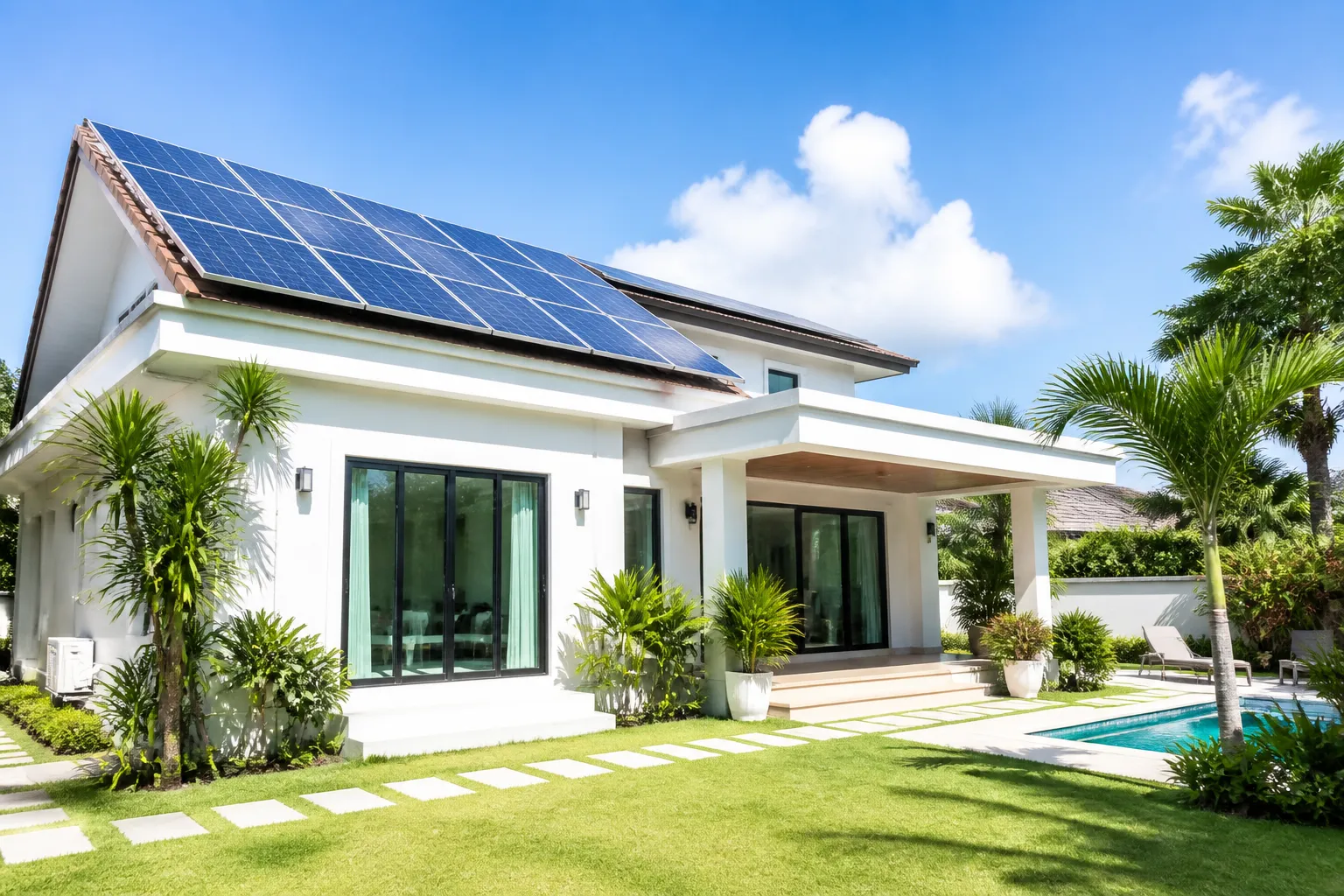
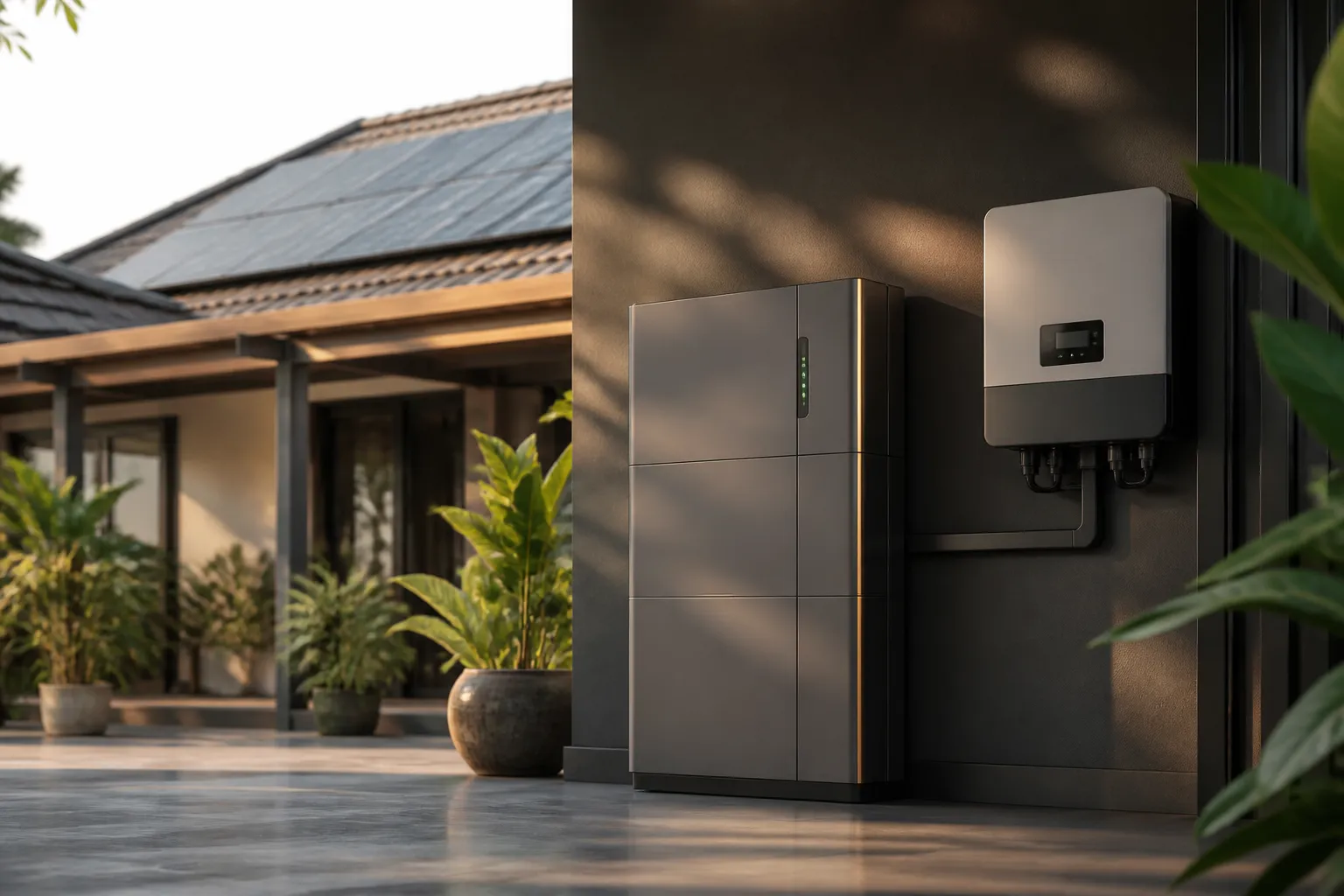
For modern home solar battery systems, Thai Solar Power normally prefers LFP batteries, also known as LiFePO₄ or Lithium Iron Phosphate batteries.
LFP has become one of the main battery technologies used for solar energy storage because it combines long cycle life, good usable capacity, low maintenance and intelligent battery management. For homes where the battery may charge from solar during the day and discharge again in the evening, these advantages matter.
Why Choose LFP Instead of Lead-Acid?
Lead-acid batteries have been used for backup power for many years, but daily solar energy storage is a demanding application.
A good-quality LFP battery can provide around 6,000 cycles or more, depending on the battery model, operating temperature, depth of discharge and manufacturer specifications. Many modern home LFP batteries are also available with long warranties, often around 10 years.
LFP batteries can generally use more of their available capacity than traditional lead-acid battery banks without requiring the same conservative discharge limits. They are also compact and require very little routine maintenance.
For these reasons, LFP is normally our preferred technology when designing a modern home battery system.
Smart Battery Management
Another important advantage is the Battery Management System, or BMS.
The BMS monitors the battery cells, temperature, voltage, state of charge and charging or discharging conditions.
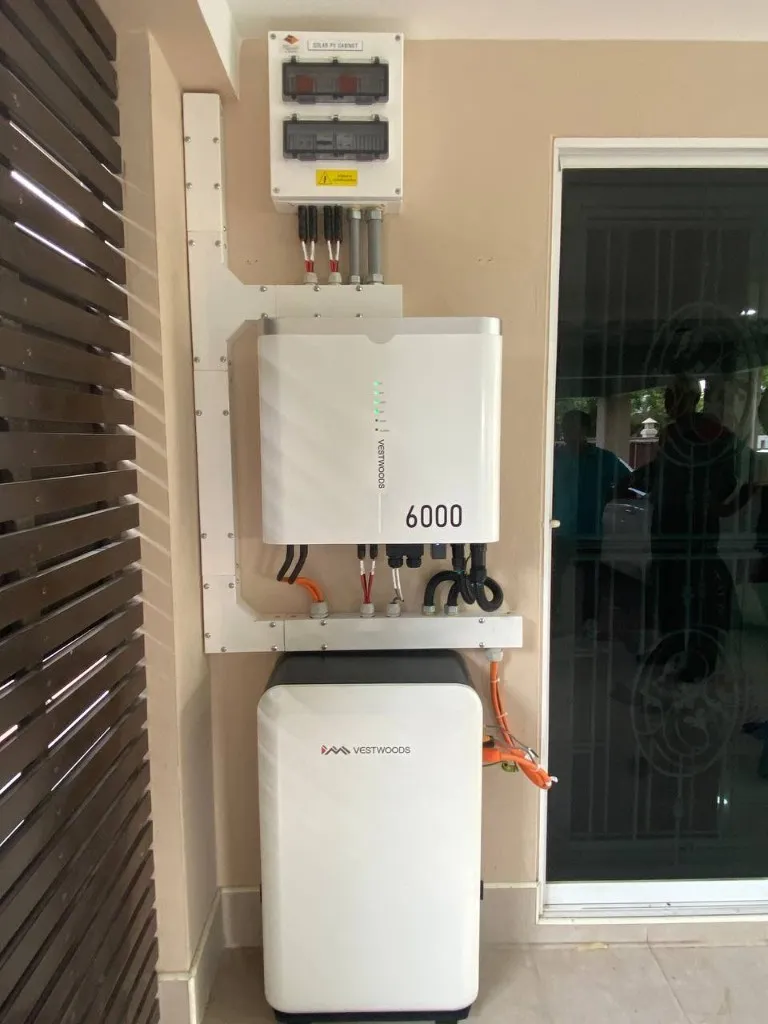
With a correctly matched system, the battery BMS also communicates with the hybrid inverter. This is important because we do not look at the battery and inverter as separate products — they need to work together correctly.
Low-Voltage or High-Voltage Battery?
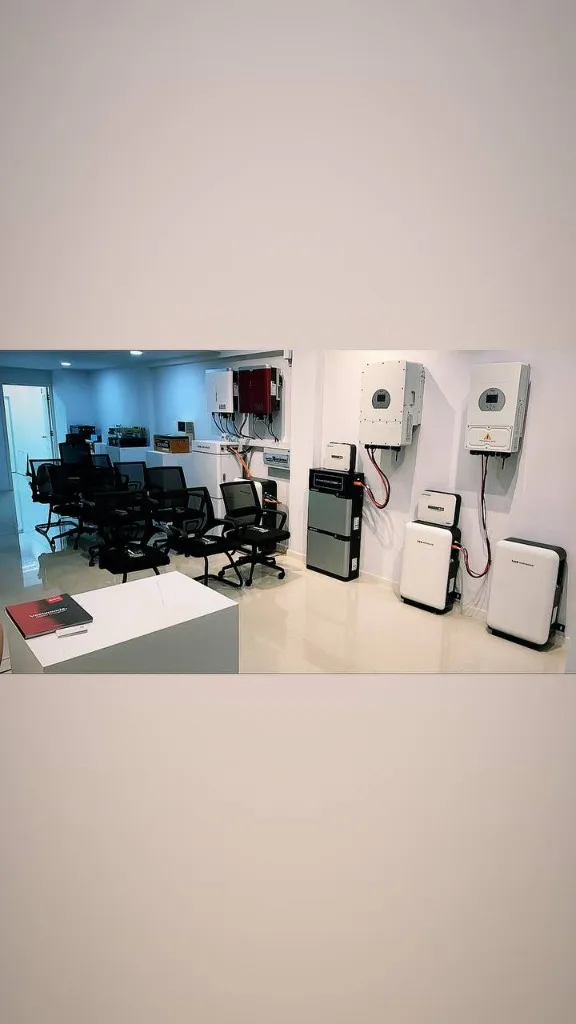
LFP home batteries are available in both Low Voltage (LV) and High Voltage (HV) systems. Low-voltage batteries commonly use around 48–51 V with compatible LV hybrid inverters, while HV systems use multiple modules at a higher DC voltage.
Neither LV nor HV is automatically better. The right choice depends on the inverter, battery capacity, required power and overall system design. At Thai Solar Power, we select the inverter and battery together for full compatibility.
Where Should an LFP Home Battery Be Installed?
Battery location is especially important in Thailand’s hot climate. Whenever possible, we prefer a protected, shaded location with good ventilation and without direct sunlight.
The battery’s IP rating must also be considered. Some batteries are designed for protected indoor installation (for example IP20). Others offer higher protection such as IP54, IP55 or IP65. A high IP rating still does not mean a battery should sit in direct sun or unnecessary heat and rain — always follow the manufacturer’s installation conditions.
Why Thai Solar Power Prefers LFP
For most modern home solar battery installations, we prefer LFP because it offers:
- Long cycle life
- High usable battery capacity
- Smart BMS monitoring and protection
- Low maintenance
- LV and HV system options
- Good suitability for regular solar charging and discharging
But battery quality is only one part of a reliable system. Correct battery sizing, inverter compatibility, installation location and system settings all affect how well the battery performs over its lifetime.
See a real villa project using LFP battery storage: 23.22 kWp Hybrid Solar System in Krabi | Villa Case Study.
Plan Your Home Solar Battery System
Planning a home solar or battery system? Contact Thai Solar Power — we will review your requirements, then offer a suitable solar, inverter and battery configuration for your home.